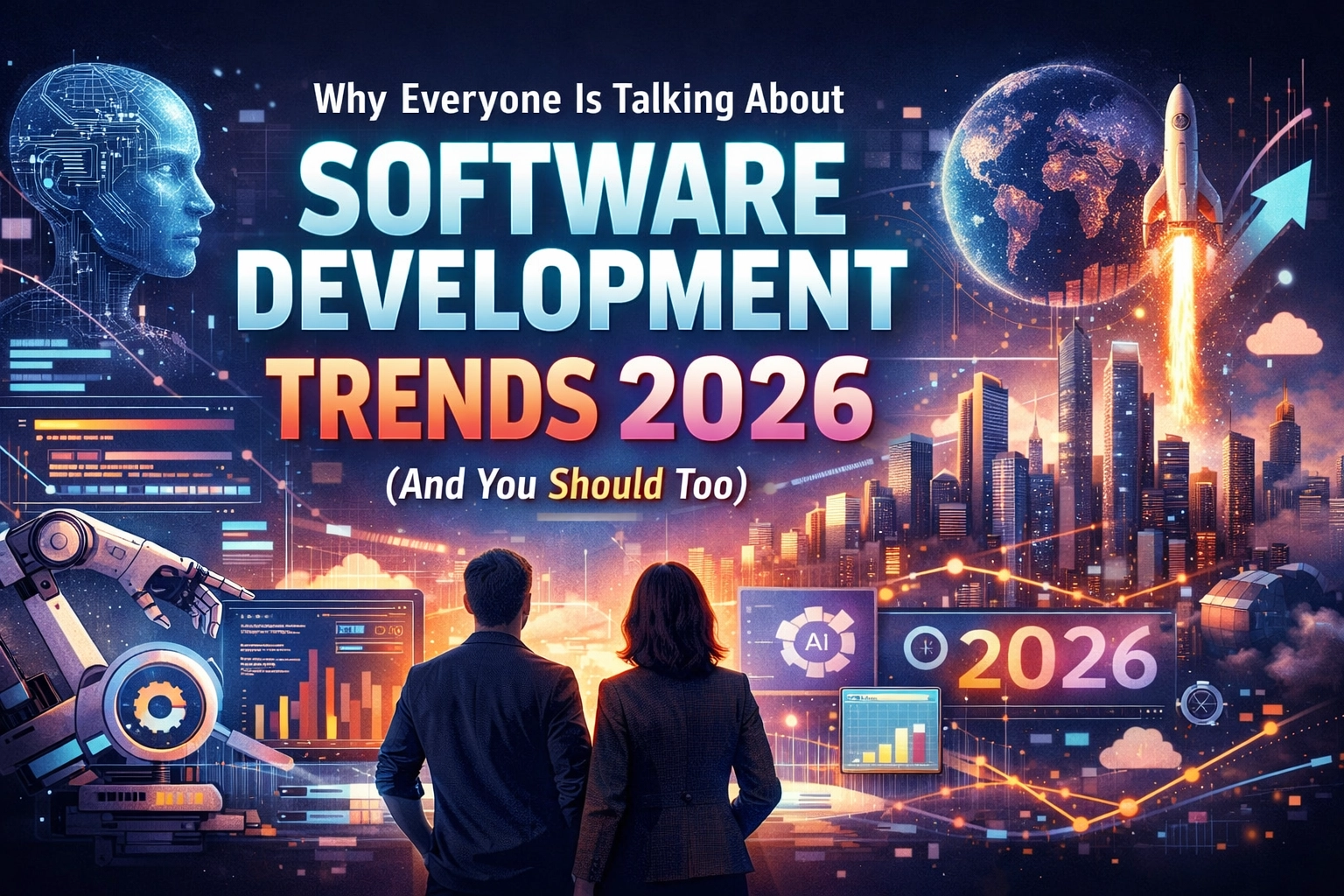
It is March 2026, and the landscape of software development has shifted more in the last 24 months than it did in the previous decade. We’ve moved past the era of "AI hype" where companies were just playing around with chatbots and basic automation. Today, we are in the era of operationalized intelligence. If you aren't paying attention to how software is being built right now, you aren't just missing a trend: you’re missing the boat on how business itself functions.
Global spending on AI is hitting over $300 billion this year. More importantly, about 75% of organizations have moved their AI projects out of the "lab" and into full production. For developers and business leaders, this means the tools we use, the way we scale, and the speed at which we deploy have reached a breaking point.
The Rise of the AI-Native IDE
The Integrated Development Environment (IDE) used to be a glorified text editor with some helpful plugins. In 2026, the IDE is your primary collaborator. We’ve moved far beyond simple "autocomplete" features. Modern, AI-integrated IDEs now function as context-aware agents that understand your entire codebase, your documentation, and your architectural patterns.

What makes this a game-changer is Contextual Reasoning. Older tools would suggest a line of code based on the previous line. New-age IDEs use Retrieval-Augmented Generation (RAG) to scan your specific microservices architecture and suggest fixes that don't just work: they align with your company’s specific security protocols and styling guides.
Reports show that developers using these advanced AI assistants are finishing tasks up to 55% faster. At major tech firms, it’s now common to see 25% to 30% of the production code being generated by AI, then refined and audited by human engineers. This doesn't replace the developer; it elevates them to a "System Architect" role, where they spend less time debugging syntax and more time solving complex logic problems.
Serverless Growth: Scaling Without the Overhead
While AI gets the headlines, the backbone of 2026 software is Serverless. The dream of "writing code and letting it run" has finally matured. Earlier versions of serverless computing suffered from "cold starts" and limited execution times, which made them frustrating for heavy-duty applications.
In 2026, those barriers are largely gone. We are seeing a massive shift toward Serverless Microservices. Instead of managing clusters or worrying about scaling your Kubernetes pods manually, the infrastructure now adjusts in real-time based on granular event triggers.
Why does this matter for your business?
- Cost Efficiency: You only pay for the milliseconds your code actually runs.
- Focus: Your team stops acting like part-time sysadmins and starts acting like full-time product builders.
- Speed to Market: You can deploy a new feature in minutes because the infrastructure layer is abstracted away.
Combined with AI-integrated IDEs, serverless allows a small team of three developers to maintain a platform that would have required a team of twenty just five years ago.
The Low-Code/No-Code Convergence
For a long time, professional developers looked down on low-code platforms. That snobbery is dead. In 2026, low-code and no-code tools have become a vital part of the professional developer’s toolkit.
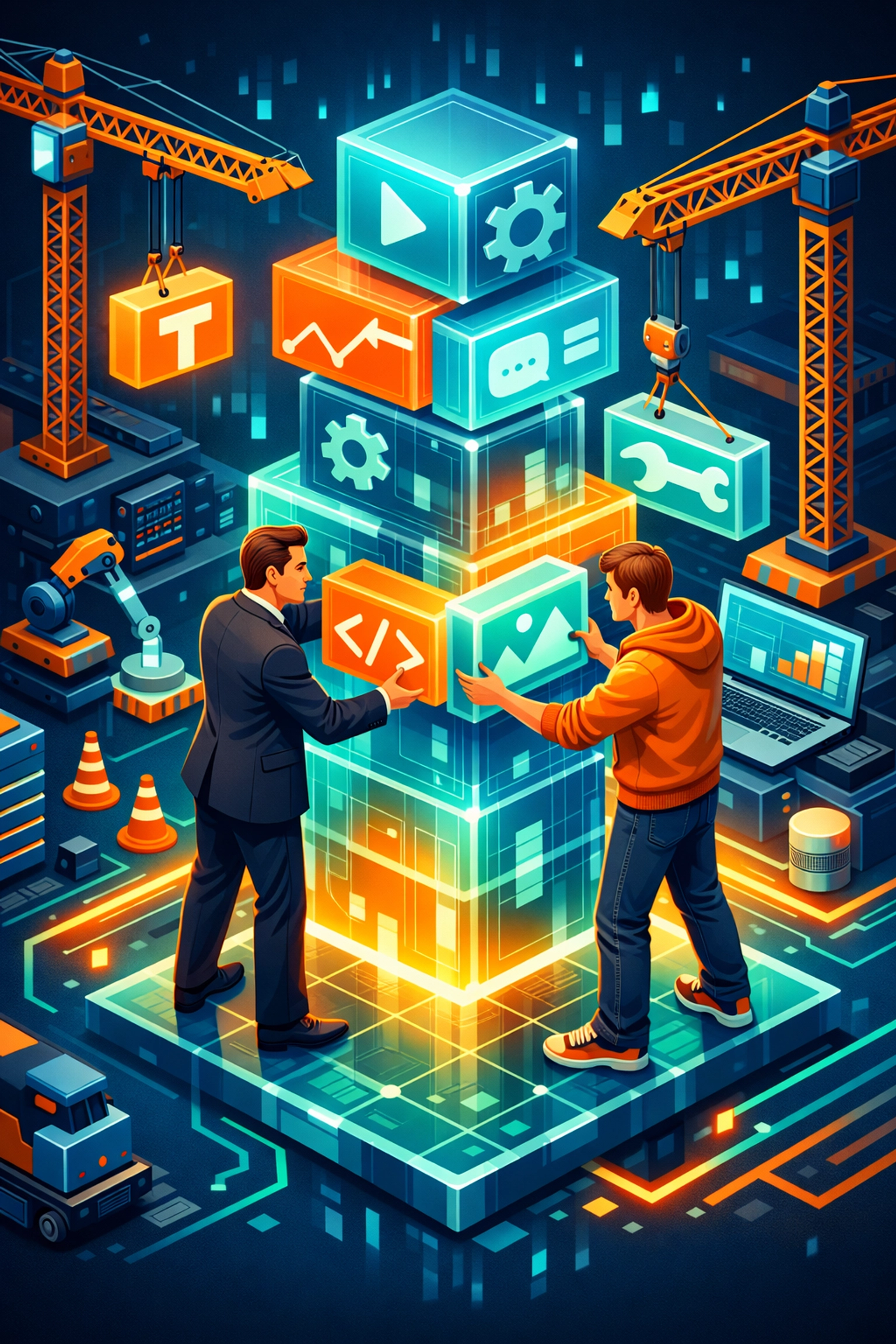
Gartner forecasts that over 65% of all software development projects now utilize low-code platforms in some capacity. The trend here isn't about replacing custom code; it's about Prototyping and Internal Tooling. Instead of spending three weeks building a custom internal dashboard for the sales team, a developer can spin one up in three hours using a low-code interface and focus their "real" coding time on the customer-facing product.
This convergence creates a "fusion team" environment. Business analysts can build the logic for a workflow, and the engineering team can "eject" that logic into a high-performance code environment when it needs to scale. It’s a hybrid approach that reduces the bottleneck of the IT department and allows the business to move at the speed of thought.
Edge AI: Bringing Brains to the Border
We can't talk about 2026 without mentioning the shift from centralized cloud computing to Edge AI. With the widespread adoption of 5G and more powerful IoT hardware, we are no longer sending every single bit of data back to a central server in Virginia or Dublin to be processed.
Edge AI means the "intelligence" happens right where the data is collected: whether that’s a smart sensor in a factory, a medical device in a hospital, or a car on the road. This reduces latency to near zero.
Consider a financial application. In 2026, fraud detection isn't something that happens "after" a transaction is processed. The analysis happens at the edge, at the point of interaction, stopping the transaction before it even hits the main ledger. This isn't just a technical upgrade; it's a fundamental change in how we provide security and real-time experiences to users.
The New Security Reality: AI vs. AI
Cybersecurity in 2026 is an arms race. Hackers are using AI to find vulnerabilities in code faster than any human could. Consequently, the "DevSecOps" trend has evolved into Autonomous Security.

Software development now includes security as an automated, continuous process. We are seeing:
- Self-Healing Code: When a vulnerability is detected, the AI-integrated system suggests and applies a patch automatically.
- Zero-Trust by Default: Because of the complexity of microservices and edge computing, the "perimeter" of a network no longer exists. Every single request, even those within the network, is verified.
- AI-Generated Phishing Defense: Using AI to simulate attacks on your own team to train them and harden the software against social engineering.
If you aren't integrating these automated security trends into your development lifecycle, you aren't just vulnerable: you’re an easy target.
Why You Should Care (The Bottom Line)
If you’re a business owner or a tech leader, these trends represent a massive opportunity to outpace your competition. PwC’s latest CEO survey shows that AI and modern development practices are the primary "market separators" between the leaders and the laggards.
The organizations that win in 2026 are the ones that:
- Embrace AI as a Partner: They don't fear AI; they use it to 2x their developer output.
- Modularize Everything: Using serverless and microservices to stay agile.
- Democratize Development: Letting low-code tools handle the "easy stuff" so the experts can handle the "hard stuff."
- Prioritize Real-Time: Moving processing to the edge to give users the fastest possible experience.
The window to "wait and see" has closed. The technology is here, it’s stable, and it’s being used by your competitors right now.
Final Thoughts
Software development isn't just about writing lines of code anymore. It’s about orchestrating intelligent systems, leveraging massive amounts of automated infrastructure, and moving with a level of speed that was previously impossible. Whether you are building the next big SaaS or just trying to keep your company’s internal tools running smoothly, these 2026 trends are your roadmap to success.

The goal isn't just to keep up with the tech; it's to use the tech to solve real problems for your users faster than ever before. So, look at your current stack. Is it ready for the "Intelligence Age," or is it still stuck in the "Cloud Age"? Now is the time to make that shift.
About the Author: Malibongwe Gcwabaza
Malibongwe Gcwabaza is the CEO of blog and youtube, a leading voice in the tech and software development space. With years of experience navigating the intersection of business strategy and emerging technology, Malibongwe focuses on making complex technical trends accessible and actionable for leaders worldwide. When not steering the company toward the future of AI-driven development, he is passionate about mentoring the next generation of software architects and creators.
About the Author