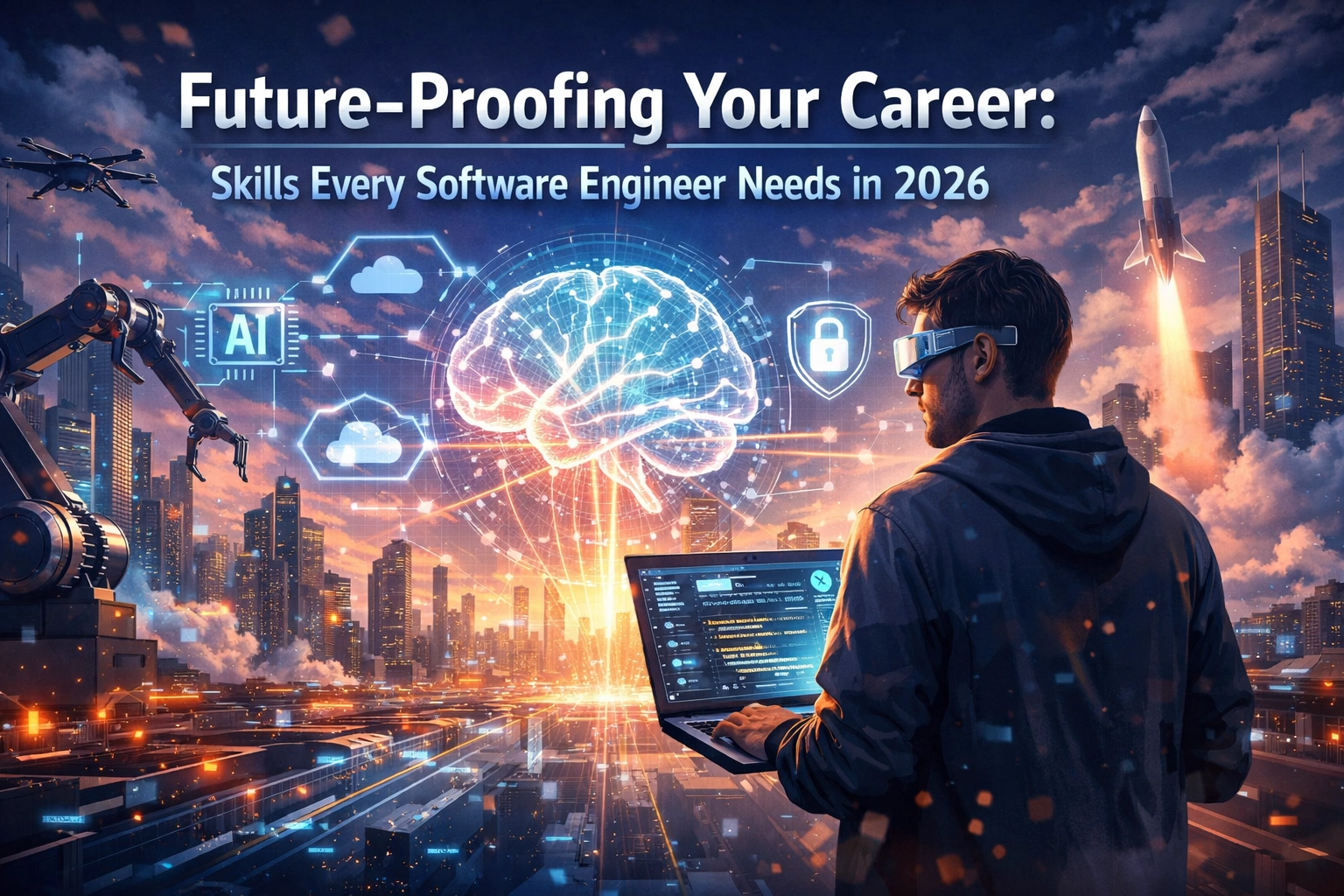
It is March 2026, and the landscape of software engineering looks drastically different than it did even two years ago. We’ve moved past the initial "AI will take our jobs" panic and entered a phase of high-speed integration. If you’re still thinking that just knowing a programming language is enough to keep your seat at the table, it’s time for a reality check.
The bar has moved. What used to be considered "senior-level" architectural knowledge is now the baseline for everyone. Companies aren't just looking for "coders" anymore; they are looking for engineers who can navigate distributed systems, leverage AI as a force multiplier, and communicate complex trade-offs to non-technical stakeholders.
If you want to stay relevant, high-earning, and indispensable, here are the core skills you need to master right now.
1. The AI-Augmented Developer (Beyond Prompt Engineering)
In 2026, using an AI coding assistant is as common as using an IDE. But the skill isn't just about asking a chatbot to write a function. It’s about AI Orchestration.
You need to understand how to integrate Large Language Models (LLMs) into production environments. This means moving beyond simple API calls and understanding concepts like Retrieval-Augmented Generation (RAG), managing latency, and cost-optimization for AI tokens.
Furthermore, Vector Databases (like Pinecone, Milvus, or Weaviate) have become a standard part of the stack. Knowing how to store, query, and optimize embeddings is no longer just for data scientists, it’s a core backend skill. If you can’t build a system that intelligently uses AI to solve a user problem, you’re leaving money on the table.

2. System Design and Distributed Architecture
Research shows that system design is currently the most valuable skill in the market. Why? Because AI can write code, but it still struggles to design complex, resilient, and scalable systems.
As applications become more distributed, you need to be comfortable with:
- Microservices vs. Serverless: Knowing when to use which (and when to stick to a monolith).
- Event-Driven Architecture: Understanding message brokers like Kafka or RabbitMQ to handle asynchronous communication.
- Observability: It’s not enough to build it; you have to know why it’s breaking. Mastery of tools like Prometheus, Grafana, and OpenTelemetry is essential for maintaining "five nines" of uptime.
The "T-shaped" professional is the winner here. You need deep expertise in one area (say, React or Go) but a broad understanding of how every piece of the puzzle, from the CDN to the database, interacts.
3. Cloud-Native Mastery and Kubernetes
The cloud is no longer "someone else's computer", it’s your development environment. Over 90% of companies now require cloud expertise.
Whether it's AWS, Azure, or Google Cloud, you need to understand cloud-native architecture. This means:
- Infrastructure as Code (IaC): If you’re clicking buttons in a console to deploy, you’re doing it wrong. Tools like Terraform or Pulumi are the industry standard for reproducible infrastructure.
- Kubernetes and Containers: Orchestrating containers at scale is a baseline requirement. You don't need to be a DevOps engineer, but you should be able to navigate a K8s cluster, understand pods, and manage deployments.
In 2026, the line between "Developer" and "DevOps" has blurred significantly. The most successful engineers are those who can own their code from the local machine all the way to production.

4. Modern Data Handling: Databases and Beyond
A slow database is the quickest way to kill a great product. In 2026, we’ve moved beyond just "SQL vs. NoSQL." You need a more nuanced approach to data.
- Query Optimization: As data volumes explode, knowing how to write efficient queries and design proper indexing strategies is critical.
- New-Age Databases: Understanding specialized databases (Graph databases for relationships, Time-series for logs/metrics, and Vector DBs for AI) allows you to pick the right tool for the job.
- Privacy Engineering: With stricter global regulations, designing for data privacy from day one is a requirement. Knowing how to implement encryption at rest, data masking, and GDPR-compliant deletion is a high-demand skill.
5. Security as a First-Class Citizen
Gone are the days when security was the "Security Team's" problem. In the era of automated exploits and AI-driven cyberattacks, security must be baked into the development lifecycle.
Every engineer needs to understand:
- Secure Coding Practices: Avoiding the OWASP Top 10 by default.
- CI/CD Security: Ensuring that your deployment pipeline isn't a backdoor for attackers.
- Identity and Access Management (IAM): Properly managing permissions so that a single compromised service doesn't take down the whole company.
If you can prove that you build secure-by-design systems, you become a massive asset to any enterprise.

6. The "Human" Edge: Communication and Collaboration
As AI takes over more of the "heavy lifting" in coding, the human elements of engineering become more valuable. Software development is a team sport, and in a world of distributed, remote teams, your ability to communicate is your superpower.
- Technical Writing: Can you document a system so clearly that a junior dev can understand it without a 3-hour meeting?
- Stakeholder Management: Can you explain to a Product Manager why a certain feature will take three weeks because of "technical debt" without making their eyes glaze over?
- Code Reviews: Providing constructive, empathetic feedback that levels up the team rather than just pointing out syntax errors.
7. Adaptability and Continuous Learning
The most dangerous thing you can do for your career is get comfortable. The tech stack you use today will likely be outdated in three years.
The "meta-skill" of 2026 is learning how to learn. This means:
- Contributing to Open Source to stay on the cutting edge.
- Building side projects to experiment with new frameworks.
- Staying curious about industry trends (like WebAssembly, Edge Computing, or Quantum-ready encryption).
Priority Ranking: Where to Start?
If you're feeling overwhelmed, don't try to learn everything at once. Based on current market demand, here is how you should prioritize your learning:
- System Design: This is the gatekeeper for high-paying, senior roles.
- Cloud Architecture & IaC: The foundation of modern deployment.
- AI/LLM Integration: The most "in-demand" new skill for 2026.
- Security & Observability: The skills that keep you employed during crises.
Final Thoughts
The engineers who will thrive in 2026 are not the ones who can write the most lines of code. They are the ones who can use every tool at their disposal: AI, cloud infrastructure, and architectural patterns: to solve real-world problems efficiently.
Stop thinking of yourself as a "Java Developer" or a "React Specialist." Start thinking of yourself as a Solution Architect who happens to use those tools. The future belongs to those who stay curious, stay technical, and never stop building.
About the Author: Malibongwe Gcwabaza
Malibongwe Gcwabaza is the CEO of blog and youtube, a tech-forward platform dedicated to empowering the next generation of software professionals. With over a decade of experience in the tech industry, Malibongwe focuses on bridging the gap between raw technical skill and strategic business value. When he isn't steering the company toward new digital horizons, he's mentoring developers on how to navigate the ever-evolving AI landscape.
About the Author