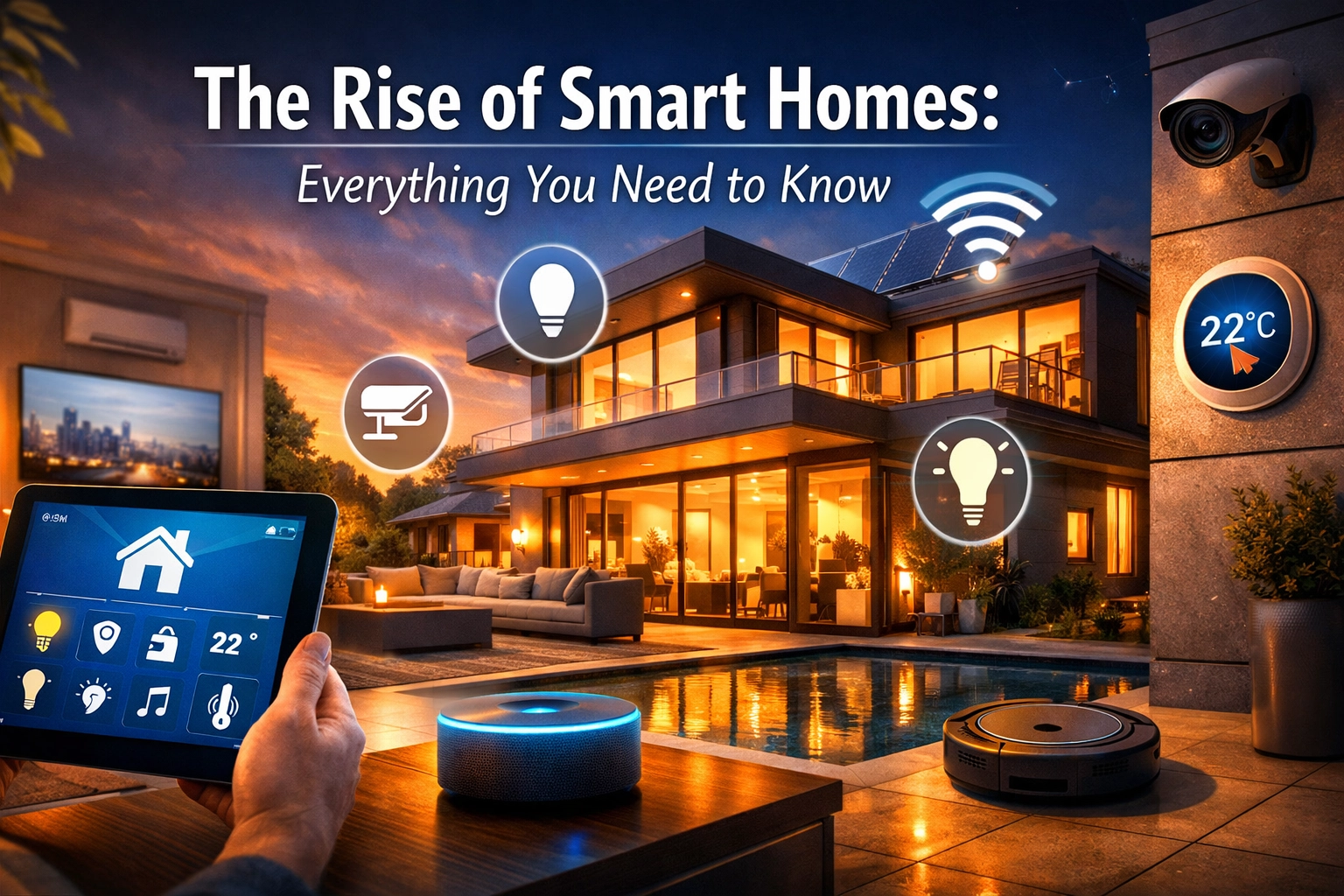
Smart home technology has transitioned from a futuristic luxury to a standard household expectation. As of March 2026, the global smart home market is on a trajectory toward a $139 billion valuation by 2032. Nearly 50% of households in North America and Europe have integrated at least one smart device into their daily routines. This isn't just about turning off lights with your voice; it's about a fundamental shift in how our living spaces interact with us.
The complexity that once plagued the industry: where a smart bulb from one brand wouldn't talk to a switch from another: has largely been solved. We are now in the era of "Matter," a unified connectivity standard that ensures your devices work together regardless of whether you prefer Apple, Google, or Amazon. This guide breaks down the current state of smart home technology, the core benefits for beginners, and how to build a system that actually makes your life easier.
The Foundation: How Modern Smart Homes Work
To understand the rise of smart homes, you have to look under the hood at the communication protocols. In the early 2020s, the "smart home" was a mess of competing apps and incompatible hubs. Today, three main pillars support the modern ecosystem:
- The Matter Protocol: This is the most significant development in smart home history. Matter is a universal language that allows devices to communicate locally without needing a constant cloud connection. If a device has the Matter logo, it will work with your existing setup.
- Edge Computing: Historically, when you asked a smart speaker to turn on a light, that request traveled to a server thousands of miles away and back again. Modern systems use edge computing, processing the data locally on your home hub. This reduces latency to near-zero and significantly improves privacy.
- Thread Networking: This is a mesh networking protocol designed specifically for low-power devices. Unlike Wi-Fi, which can get bogged down by dozens of devices, Thread becomes stronger as you add more products, as each device acts as a "node" to pass signals along.

Core Components for Every Smart Home
If you are just starting out, the sheer number of gadgets can be overwhelming. To build a functional home, focus on these four categories.
1. Smart Lighting
Lighting is the easiest entry point. Beyond the novelty of changing colors, smart lighting focuses on "circadian rhythm" programming. In 2026, systems like Philips Hue and Nanoleaf automatically adjust the color temperature of your home throughout the day: cool blue light in the morning to wake you up, and warm amber tones in the evening to prepare your body for sleep.
2. Intelligent Climate Control
Smart thermostats are the heavy hitters when it comes to return on investment. Modern AI-driven thermostats, such as the latest Nest or Ecobee models, don't just follow a schedule; they learn your habits. Research shows these devices can save homeowners up to 20% on annual energy bills by optimizing heating and cooling based on occupancy sensors and local weather patterns.
3. Security and Access
The days of fumbling for keys are ending. Smart locks now utilize biometric data: such as thumbprints or "Apple HomeKey" via your watch: to grant access. Combined with 4K security cameras that use on-device AI to distinguish between a delivery driver, a neighbor, and a stray animal, the modern security stack is proactive rather than reactive.
4. Advanced Energy Management
With the rise of electric vehicles (EVs) and rising utility costs, energy management has become a pillar of the smart home. Systems like the EcoFlow Ecosystem Alliance allow homeowners to monitor real-time energy consumption and automatically switch to battery backup during peak pricing hours, effectively "arbitraging" the power grid to save money.
AI and Robotics: The 2026 Innovation Wave
The most visible change in 2026 is the integration of high-level AI into physical hardware. We have moved past simple vacuum robots. The latest innovations showcased at CES 2026 highlight a move toward autonomous home maintenance.
- Spatial Mapping Robots: The Roborock Saros Rover is a prime example. It uses 3D spatial mapping and LiDAR to navigate multi-story homes, handling stairs and complex furniture layouts that would have trapped previous generations of robots.
- AI Appliances: Samsung’s Bespoke AI line now features refrigerators that recognize the ingredients inside and suggest recipes based on expiration dates. This isn't just a screen on a fridge; it’s a computer vision system designed to reduce food waste.
- AI Chefs: Devices like the Wan AIChef Ultra use precise heat sensors and AI algorithms to recognize food items and control cooking temperatures across multiple zones simultaneously, bringing professional-grade precision to beginner cooks.

The Benefits: Why Bother With a Smart Home?
The primary driver for smart home adoption isn't "cool factor": it's utility.
Efficiency and Sustainability: The integration of smart sensors ensures that energy is never wasted. Lights turn off when rooms are empty, and blinds close automatically when the afternoon sun threatens to overheat the living room. For those with solar installations, smart homes can prioritize running energy-intensive appliances (like dishwashers) when solar production is at its peak.
Accessibility and Aging in Place: Smart homes provide a massive boost to independence for the elderly and those with disabilities. Voice-activated controls for doors, lights, and appliances remove physical barriers. Moreover, fall-detection sensors and "wellness monitoring" air purifiers allow families to keep an eye on elderly relatives without infringing on their privacy via invasive cameras.
Enhanced Security: Traditional alarms only tell you when someone has already entered. Smart systems use "pre-roll" video and perimeter sensors to alert you before a breach happens. With the integration of blockchain-secured encryption in premium systems, these feeds are shielded from hackers, ensuring your private life stays private.
How to Get Started: A Step-by-Step Guide
Building a smart home should be an incremental process. Do not try to automate everything in one weekend.
Step 1: Choose Your Ecosystem
Decide which platform will be your "brain."
- Apple Home: Best for privacy and those already in the iOS ecosystem.
- Google Home: Best for search integration and Google Assistant fans.
- Amazon Alexa: Best for device compatibility and sheer variety of hardware.
- Home Assistant: Best for tech-savvy users who want total local control and no cloud reliance.
Step 2: Upgrade Your Network
A smart home is only as good as its Wi-Fi. If you have more than 20 devices, a standard ISP-provided router will struggle. Invest in a Wi-Fi 6E or Wi-Fi 7 mesh system to ensure every corner of your house has a stable connection.
Step 3: Start with "Problem Areas"
Don't buy gadgets just because they exist. Identify a problem. Do you always forget to turn off the porch light? Get a smart switch. Is your upstairs too hot in the summer? Get a smart thermostat with room sensors.
Step 4: Prioritize Matter-Compatible Devices
When shopping, look for the Matter logo. This ensures that even if you switch from an iPhone to an Android in three years, your expensive smart blinds will still work.

Future Outlook: 2027 and Beyond
The next frontier for smart homes is the "Proactive Home." Currently, most smart homes are "Reactive": you tell them to do something, and they do it. The shift is moving toward AI agents that autonomously manage your home.
By 2027, we expect to see AR (Augmented Reality) glasses that provide immersive control overlays. Imagine looking at your thermostat and seeing a holographic overlay of your energy usage for the month. Furthermore, quantum-secure encryption will become the standard for home networks, protecting the massive amounts of data these devices generate from future cyber threats.
The "Rise of the Smart Home" is no longer a prediction; it is our current reality. By starting with a solid foundation of compatible hardware and focusing on energy efficiency and security, any beginner can transform a traditional house into a responsive, intelligent living environment.
About the Author: Malibongwe Gcwabaza
Malibongwe Gcwabaza is the CEO of "blog and youtube" and a dedicated tech strategist with over a decade of experience in digital transformation. He specializes in making complex emerging technologies accessible to everyone, from startup founders to homeowners. When he isn't analyzing the latest AI trends or testing smart home protocols, Malibongwe focuses on how technology can be used to build more sustainable and efficient communities. He believes that the best technology is the kind that works so well you forget it’s even there.
About the Author