For over a decade, we’ve relied on 4G LTE to power our digital lives. It gave us the ability to stream high-definition video, navigate with real-time GPS, and run the "app economy." But as of 2026, the limits of 4G have been reached. Our cities are filled with thousands of connected devices, from smart meters to autonomous delivery drones, and the old infrastructure simply can’t keep up.
This is where 5G comes in. It is not just "4G but faster." It is a fundamental redesign of how data moves across the globe. By utilizing higher frequencies, smarter antenna technology, and a more decentralized core network, 5G is laying the groundwork for a truly hyper-connected world.
The Technical Foundation: How 5G Actually Works
To understand why 5G is revolutionary, we have to look at the physics of the radio spectrum. Traditional cellular networks (3G and 4G) operate on lower frequency bands, typically below 2.5 GHz. While these waves travel long distances and pass through walls easily, they are crowded and have limited "lanes" for data.
5G operates on a "layer cake" of three different frequency bands:
- Low-Band (Sub-1 GHz): This provides the widest coverage and can penetrate buildings. It’s what keeps you connected in rural areas, though its speeds are only incrementally better than 4G.
- Mid-Band (Sub-6 GHz): This is the "sweet spot." It offers a balance of significant speed increases (up to 1 Gbps) and decent range. Most 5G deployments today rely heavily on this band.
- High-Band (mmWave): These are frequencies between 24 GHz and 40 GHz. This is where the 20 Gbps speeds live. However, millimeter waves have a short range and are easily blocked by trees, rain, or even your hand.
Massive MIMO and Beamforming
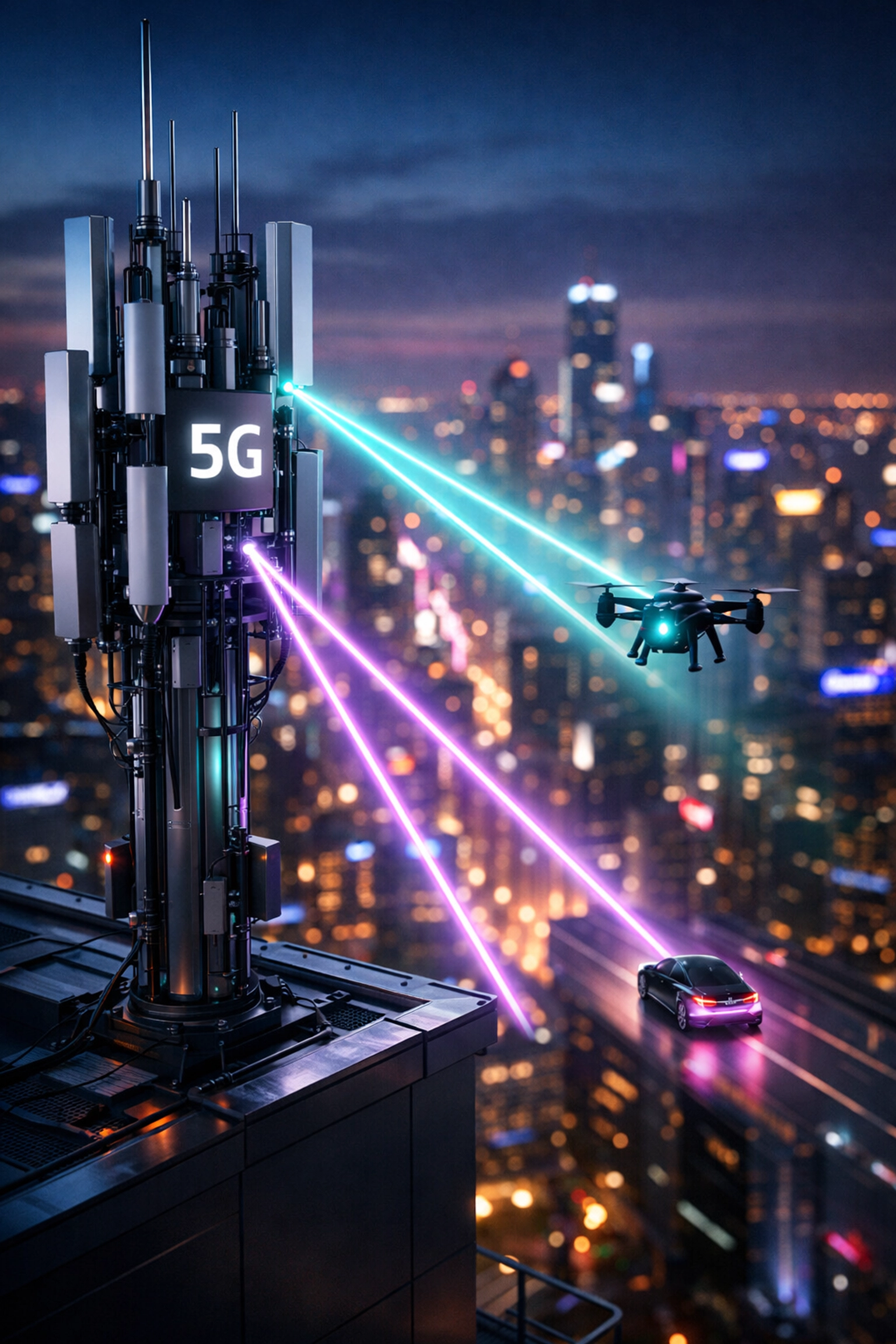
In the 4G era, cell towers acted like floodlights, blasting a signal in all directions. This was inefficient and led to interference in crowded areas. 5G uses Massive MIMO (Multiple Input, Multiple Output). A 5G base station can have dozens or even hundreds of small antennas working together.
To manage all these antennas, 5G uses a technique called beamforming. Instead of broadcasting everywhere, the base station identifies the most efficient path to your specific device and focuses a concentrated beam of data directly at you. This significantly increases capacity, allowing thousands of devices to connect in a small area: like a packed sports stadium: without the network slowing to a crawl.
The Latency Revolution: From 50ms to 1ms
When people talk about internet speed, they usually mean download speed (bandwidth). But for the next generation of technology, latency is actually more important. Latency is the "ping" or the delay between a command being sent and a response being received.
4G networks typically have a latency of about 30 to 50 milliseconds. That’s fine for watching YouTube, but it’s far too slow for split-second reactions. 5G aims for a latency of 1 to 2 milliseconds.
Why does this matter?
- Autonomous Vehicles: A self-driving car moving at 100 km/h travels about 1.4 meters in 50 milliseconds. In a 5G environment with 1ms latency, that car could receive a "stop" command from a traffic sensor and react within a few centimeters.
- Remote Surgery: Using 5G, a specialist surgeon in Cape Town could operate on a patient in a rural clinic using robotic arms with zero perceived lag.
- Cloud Gaming: 5G removes the need for expensive gaming hardware. Since the latency is so low, all the processing can happen on a remote server, with the video streamed to your device instantly.
Network Slicing: A Network for Every Need
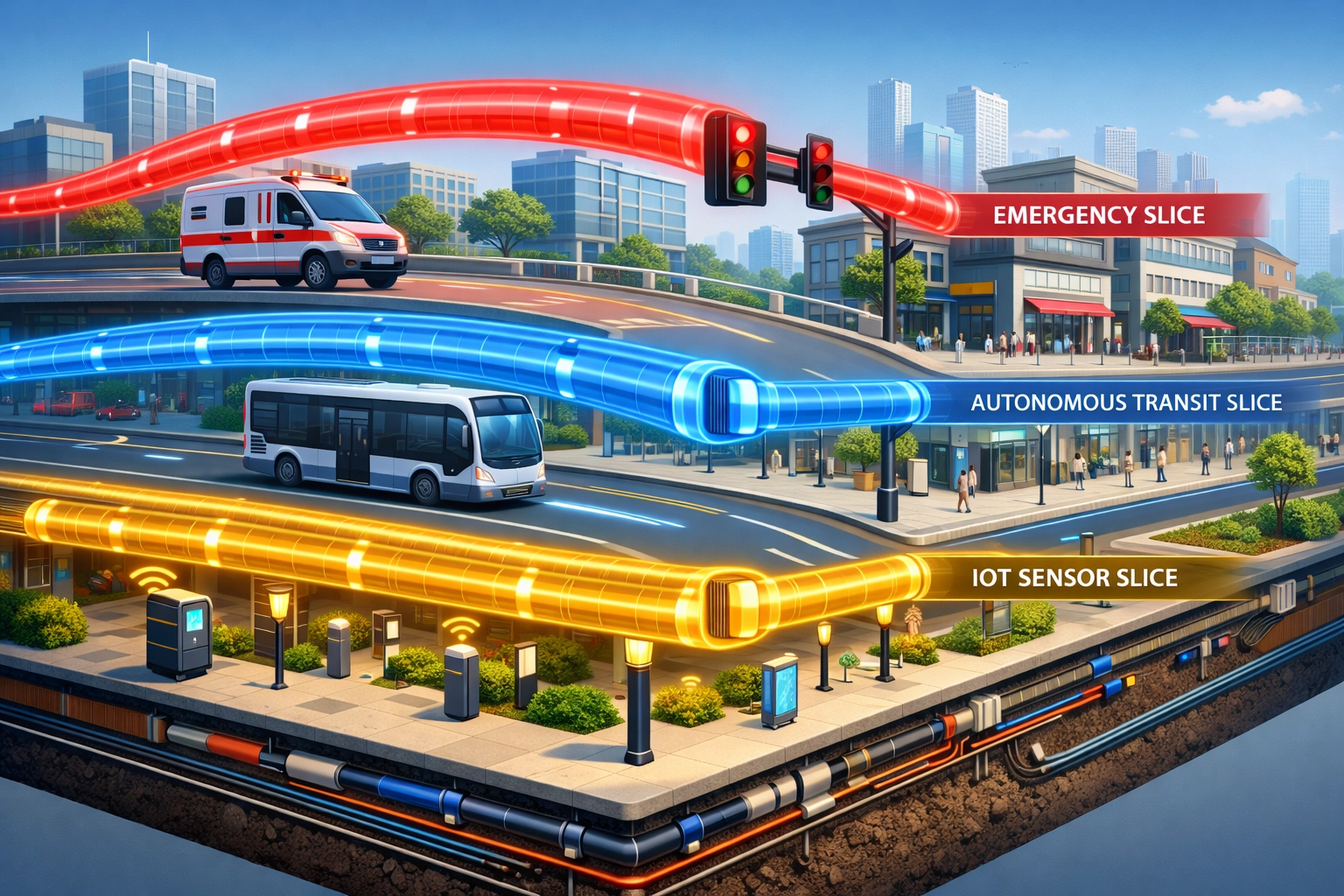
One of the most technical and transformative features of 5G is Network Slicing. In previous generations, every device on the network was treated more or less the same. Whether you were sending a simple WhatsApp text or streaming 4K video, you used the same general "pipe."
With 5G, operators can create multiple virtual networks on top of a single physical infrastructure. Each "slice" can be customized for a specific use case:
- Slice A: Optimized for high bandwidth (for 8K video streaming).
- Slice B: Optimized for low latency (for autonomous drones).
- Slice C: Optimized for low power and high density (for millions of smart water meters that only send a few bytes of data per day).
This allows the internet to be more efficient. A smart fridge doesn't need a high-priority, ultra-low latency connection, so it doesn't "clog" the lane reserved for emergency service communications.
How 5G is Changing the Internet Landscape
The arrival of 5G is shifting the internet away from being a "human-centric" tool (browsing and social media) toward a "machine-centric" infrastructure.
1. The Proliferation of the Internet of Things (IoT)
4G can support about 2,000 devices per square kilometer. 5G can support up to one million devices per square kilometer. This scale enables "Smart Cities" where every streetlight, trash can, and parking space is connected to the cloud, allowing for real-time management of city resources and traffic flow.
2. Edge Computing Integration
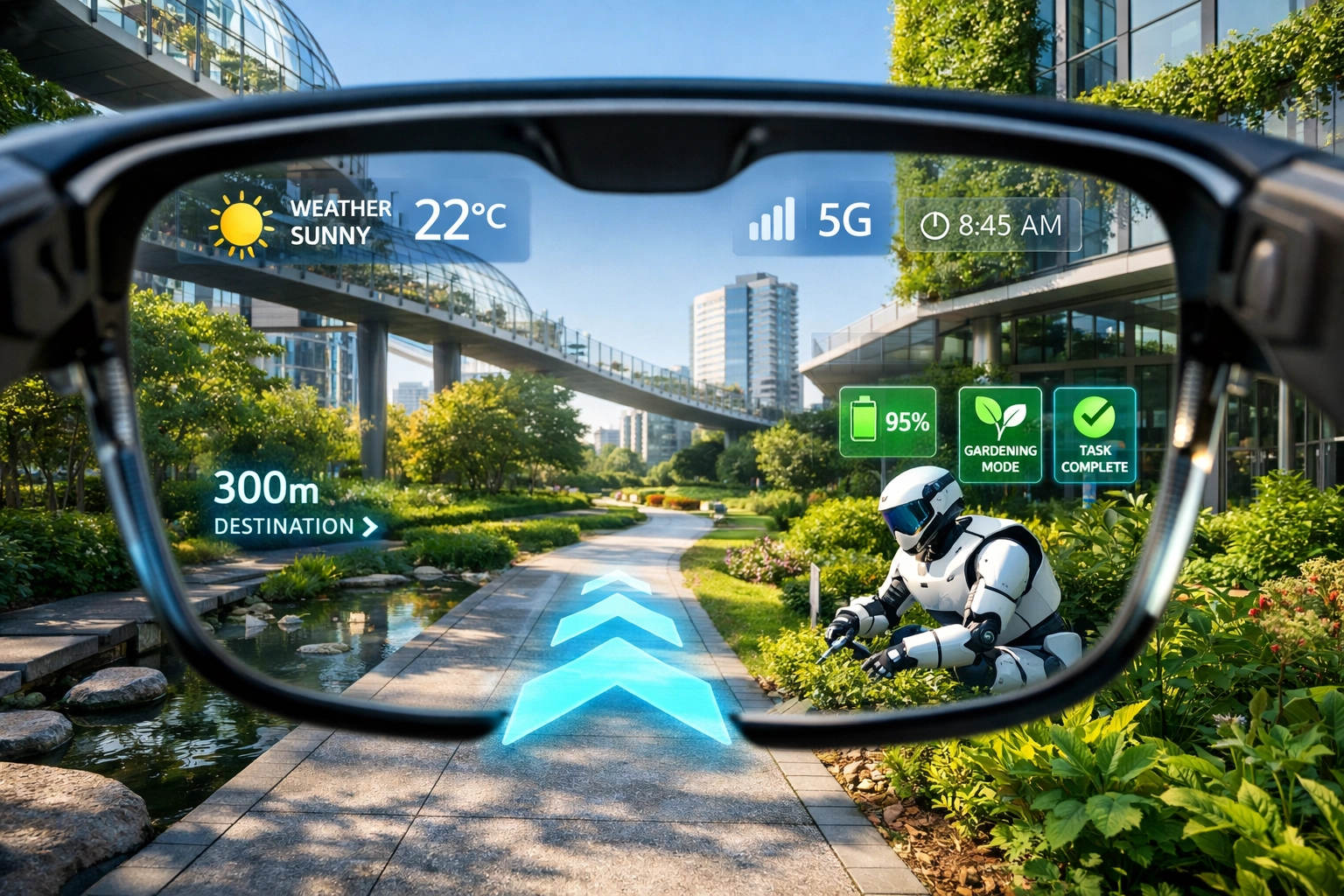
Because 5G moves data so fast, we are seeing the rise of Edge Computing. Instead of sending data to a massive data center thousands of miles away, 5G networks often process data at "the edge": on small servers located right at the base of the cell tower. This further reduces latency and is essential for applications like Augmented Reality (AR), where digital overlays must perfectly align with the physical world in real-time.
3. Fixed Wireless Access (FWA)
5G is becoming a legitimate competitor to fiber-optic home internet. In many areas, it is cheaper and faster for an ISP to give you a 5G router than to dig up the street to lay cables. For users in semi-rural areas, 5G Fixed Wireless Access provides high-speed broadband where it was previously impossible.
Challenges and Roadblocks
Despite the hype, the rollout of 5G hasn't been without hurdles.
- Infrastructure Costs: Because high-frequency mmWave signals don't travel far, providers have to install "small cells" every few hundred meters. This requires a massive investment in physical hardware and power.
- Security Concerns: With billions of more devices connected: many of them simple IoT gadgets with poor security: the "attack surface" for hackers has grown exponentially.
- Hardware Requirements: 5G requires new modems and processors. While most phones sold in 2026 are 5G-ready, older devices are being left behind as 3G and 4G spectrum is gradually "refarmed" (reallocated) for 5G use.
The Road to 6G
Even as we perfect 5G, researchers are already looking toward 6G. Expected around 2030, 6G will move into even higher frequencies (Terahertz waves) and aims for speeds of 1 Terabit per second. But for the rest of this decade, 5G will remain the backbone of the digital economy. It is the invisible thread connecting our cars, our homes, and our workplaces.
The internet is no longer just a place we go to "visit" on our screens. Thanks to 5G, the internet is becoming the very fabric of the physical world around us.
About the Author: Malibongwe Gcwabaza
CEO of blog and youtube
Malibongwe Gcwabaza is the visionary CEO behind blog and youtube, a leading digital platform dedicated to making complex technology accessible to everyone. With over a decade of experience in the tech and media landscape, Malibongwe focuses on the intersection of emerging connectivity, AI, and digital entrepreneurship. He believes that understanding the "how" behind our tools is the first step toward using them to build a better future. When he isn't steering the company’s strategy, he can be found exploring the latest in smartphone hardware and advocating for digital literacy across the continent.
About the Author